A reliable bike stem connects your handlebars to the fork steerer tube, directly affecting steering control, riding comfort, and cockpit setup. If you manufacture bicycles or source components for a cycling brand, choosing the wrong stem design or machining supplier can lead to fitment problems, inconsistent dimensions, and unnecessary production costs. You need a component that matches your geometry, material requirements, and assembly specifications.
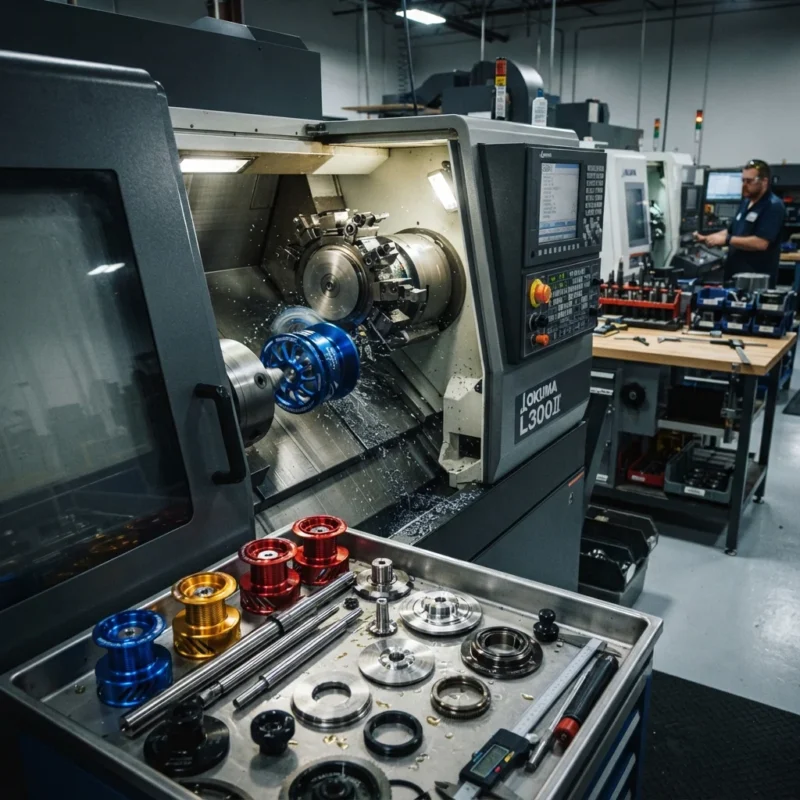
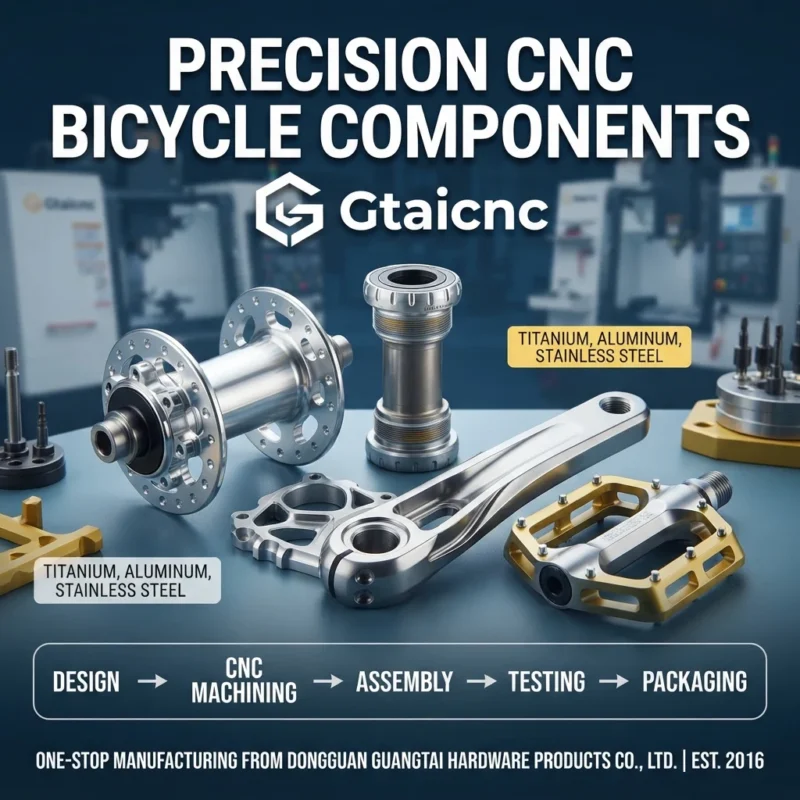
Dongguan Guangtai Hardware Products Co., Ltd., operating through Gtaicnc, provides CNC machining services for bicycle components, including hubs, bottom brackets, cranks, and pedals. Founded in 2016, the company operates 31 CNC milling machines and CNC lathes and offers a one-stop service covering machining, assembly, testing, and packaging. This manufacturing capability gives OEM buyers a practical starting point for discussing custom bike stem production, material selection, and related bicycle hardware requirements.
What Is a Bike Stem and Why Does Its Design Matter?
A bike stem connects the handlebar to the bicycle’s steerer tube. Its dimensions and construction influence handlebar positioning, steering response, and compatibility with the bicycle’s front-end components.
For manufacturers and component buyers, the right specifications depend on the intended bicycle and riding conditions. Before requesting a quote, consider these factors:
- Stem length: Determines the distance between the steerer tube and handlebar clamp, affecting rider position and handling.
- Handlebar clamp diameter: Must match the selected handlebar specification.
- Steerer tube compatibility: The stem’s mounting interface must fit the intended fork steerer tube.
- Material and geometry: Influence component weight, stiffness, strength, and manufacturing requirements.
- Surface finish: Anodizing or other suitable finishes may improve appearance and surface protection, depending on the material and application.
For custom projects, provide a technical drawing or 3D model whenever possible. This helps your manufacturing partner evaluate geometry, machining access, and assembly interfaces before production begins.
Which Materials Are Suitable for a Custom Bike Stem?
Material selection affects machining costs, component weight, mechanical properties, and finishing requirements. Your choice should reflect the intended application rather than material popularity alone.
Aluminum Alloy
Aluminum alloy is a practical option for many CNC machined bike stem designs. It combines relatively low weight with useful strength and machinability, making it suitable for customized bicycle components.
Consider aluminum when you need a balance between weight, manufacturing efficiency, and surface finish options. However, performance depends on the specific alloy, heat treatment, geometry, and manufacturing process.
Stainless Steel
Stainless steel offers corrosion resistance and strength, although its higher density can make it less attractive for weight-sensitive bicycle components. It may suit specialized hardware or applications where its particular mechanical and environmental properties justify its use.
Carbon Fiber
Carbon fiber is widely associated with lightweight, performance-oriented bicycle components. However, manufacturing a carbon fiber stem involves composite-specific processes rather than conventional metal CNC machining alone.
If your design requires a carbon fiber structure, confirm whether the supplier supports composite manufacturing or only provides machined metal components and related hardware.
CNC Machining vs. Other Manufacturing Methods for Bike Stems
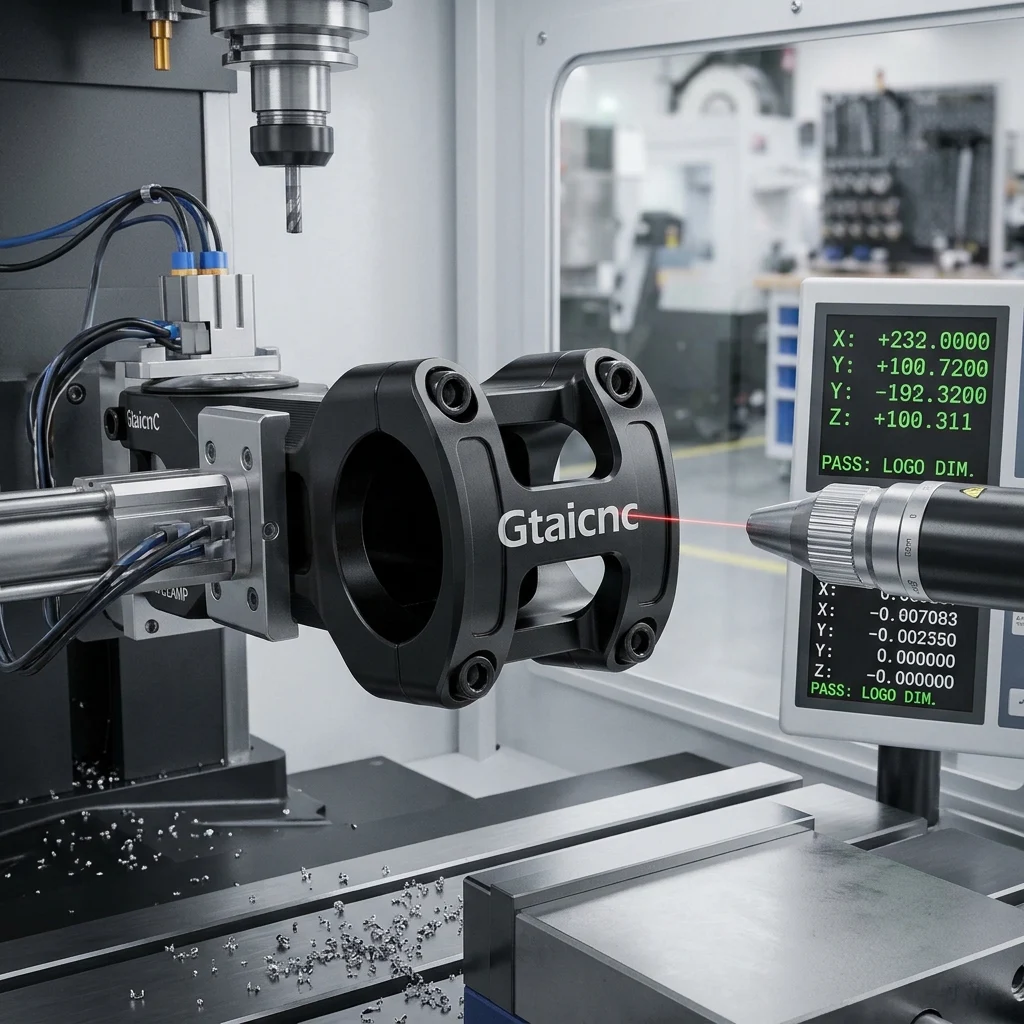
The best production method depends on design complexity, order quantity, material, and required tolerances. CNC machining is particularly useful when you need precise interfaces, customized geometry, or design changes without developing dedicated tooling for every component.
| Manufacturing method | Main advantages | Considerations | Suitable applications |
|---|---|---|---|
| CNC machining | Precise geometry, flexible customization, and repeatable machining | Material removal and machining time affect costs | Custom stems, prototypes, and specialized metal components |
| Forging | Can provide favorable mechanical properties and material utilization in suitable designs | Requires tooling and additional finishing operations | High-volume components designed around forging |
| Casting | Supports complex shapes and potentially efficient production at scale | Quality depends on casting design, process control, and finishing | Suitable designs with appropriate casting requirements |
| Carbon fiber composite manufacturing | Supports lightweight structures and tailored fiber orientation | Requires composite-specific tooling, processes, and inspection | Performance-oriented composite components |
For a new bike stem design, CNC machining can help you validate dimensions and interfaces before committing to larger production volumes. For established high-volume products, compare the total cost of alternative processes rather than evaluating machining cost alone.
How to Order Custom CNC Machined Bike Stems
A structured production process reduces specification errors and helps you evaluate suppliers more effectively.
- Define your requirements. Identify the bicycle type, intended use, target quantity, material preference, and performance requirements.
- Provide technical files. Share a dimensioned drawing or 3D CAD model, including clamp diameters, mounting interfaces, critical dimensions, and surface finish requirements.
- Review manufacturability. Ask the supplier to assess machining access, material selection, tolerances, and potential design improvements.
- Confirm the quotation and sample plan. Review pricing, tooling requirements, lead time, inspection arrangements, and sample approval conditions before placing the order.
- Verify quality and delivery requirements. Agree on inspection records, packaging, labeling, and acceptance criteria before production starts.
Gtaicnc offers a one-stop service from machining to assembly, testing, and packaging. For your project, confirm the exact scope of each service, available inspection methods, and production capacity before finalizing an order.
How to Choose a Bike Stem Manufacturer
A suitable custom bike stem manufacturer should understand both precision machining and bicycle component interfaces. Evaluate potential suppliers against measurable requirements rather than relying on general claims about quality.
Look for these capabilities:
- Relevant machining experience: Ask for examples of bicycle components such as hubs, cranks, pedals, or similar precision parts.
- Equipment and process control: Confirm which operations the supplier performs in-house and how it maintains dimensional consistency.
- Material traceability: Request material specifications and supporting documentation where required.
- Inspection capability: Establish how critical dimensions, clamp interfaces, and finished components will be checked.
- Integrated services: Determine whether assembly, testing, finishing coordination, and packaging can be managed through one supplier.
- Clear communication: Ensure the supplier can review drawings, clarify specifications, and document changes during development.
Gtaicnc was founded in 2016 and operates 31 CNC milling machines and CNC lathes. Its experience with bicycle components and one-stop manufacturing services provides a basis for discussing custom machining projects, although you should verify the specific tolerances, certifications, and inspection records relevant to your application.
FAQ
What material is best for a CNC machined bike stem?
Aluminum alloy is a common choice when balancing weight, strength, machinability, and finishing options. The appropriate alloy and design depend on the intended use and required mechanical performance.
Can a CNC machining supplier manufacture custom bike stems?
Yes, provided the supplier has suitable equipment, machining expertise, and inspection capabilities. Supply a drawing or CAD model and confirm material, tolerances, surface finish, and production quantity before requesting a quotation.
What information do you need for a bike stem quotation?
Prepare your technical drawing, material requirements, target quantity, surface finish, critical dimensions, and delivery expectations. If the design is still under development, explain your intended application so the supplier can assess manufacturability.
Conclusion
Choosing the right bike stem requires more than comparing prices. You need compatible dimensions, suitable materials, consistent machining, and a supplier that understands your production requirements. Dongguan Guangtai Hardware Products Co., Ltd. (Gtaicnc) brings experience in bicycle component manufacturing, 31 CNC milling machines and CNC lathes, and integrated services from machining to packaging. Use these capabilities as a starting point to evaluate whether the company fits your custom bicycle component project.
CTA
Contact Gtaicnc to discuss your custom bike stem project. Share your drawings, preferred material, target quantity, and required delivery date to review manufacturability, quotation details, and suitable production arrangements.